Resources by Tag
Research & Reports
When AI helps, what work is still the student's?
Privacy: Learner language in this post is paraphrased, identifying details are removed, and Instructron does not train on student work. The most important question about classroom AI is not whether a student used it. It is what the student still had to think through after the AI responded. “I don’t understand what the prompt wants.” “Can you explain it like I’m much younger?” “You told me yes when my answer was wrong.” All three are examples of a student using AI. They are not the same kind

Answer the spelling question. Then reopen the writing.
Privacy: Learner language in this post is paraphrased, identifying details are removed, and Instructron does not train on student work. Mechanics support is not a distraction from composition when it helps a student return to the idea they were trying to express. “How do you spell trying?” A teacher or writing coach could answer in a few seconds. Adults sometimes hesitate. We want students to focus on ideas, organization, voice, evidence — the work we think of as composition. Stopping to spe
"Teach it to a friend" is a strategy, not a student type
Privacy: This post discusses aggregate profile patterns and paraphrased learner language. No student, teacher, school, or district is identified, and Instructron does not train on student work. Explaining an idea to someone else can make understanding visible. That does not mean some students are “teachers” and everyone else should learn differently. Ask students how they prefer to get unstuck and you will hear different answers. Some want a small hint. Some want to see an example and then tr
Kind feedback still has to be true
Privacy: Learner language in this post is paraphrased, identifying details are removed, and Instructron does not train on student work. Students can handle respectful correction. What damages trust is praise that sounds like confirmation when the answer is wrong. “You said yes to the incorrect answer.” A student wrote that after an AI coach responded positively to a step that turned out to be wrong. The coach may have intended to affirm the attempt. Perhaps it recognized one useful idea insi
Make it easy to come back to the work
Privacy: Learner language in this post is paraphrased, identifying details are removed, and Instructron does not train on student work. Good redirection does more than stop a detour. It gives students a clear and dignity-preserving way back into the task. Give an elementary or middle school student a text box and eventually they will test what it is for. They may ask the AI what it eats. Announce that they are famous. Quote a meme. Type in all caps. Tell it to be quiet. Introduce a completely
If you won't give the answer, give a foothold
Privacy: Learner language in this post is paraphrased, identifying details are removed, and Instructron does not train on student work. “I can’t tell you the answer” may protect the work. It does not, by itself, help a student do it. The first request may be polite: “Can you just tell me the answer?” Then it gets shorter. “Give me the answer.” Then louder. “JUST TELL ME.” Students test boundaries. They bargain, joke, plead, and occasionally try to persuade the AI to break its own rules.
Before you reteach, check what students reached
Privacy: This post discusses aggregate patterns only. No teacher, student, school, or district is identified, and Instructron does not train on student work. An unfinished practice set may reveal a pacing problem before it reveals a learning problem. A dashboard shows that a student answered several questions, missed a few, and left the assignment incomplete. It is tempting to go straight to the misses. Which standard needs reteaching? Which skill has not stuck? There is a more basic questio
Don't count comments. Look for the next revision.
Privacy: Learner language in this post is paraphrased, identifying details are removed, and Instructron does not train on student work. Good writing feedback is not measured by how impressive it sounds. It is measured by what the student can do next. A student receives a thoughtful paragraph of feedback. It identifies strengths, names areas for growth, and offers several suggestions. The student reads it, closes the tab, and never touches the draft again. Was that good feedback? It may have
Two Open Text Fields, A Thousand Clues: What Students Tell Us About Themselves
Dataset: Instructron Student Learning Profiles | Fall 2025 (Aug-Nov 2025) | Aggregate data across classrooms from teachers who had students complete profiles | Grades 4-8 | All subjects Anonymization: Aggregate data; paraphrased student language; randomized IDs What we didn't do: No training on student work; profiles are opt-in and teacher-assigned; responses reflect student self-perception, not performance metrics The Open Field In the final step of their learning profiles, students see tw
Small Wins, Big Persistence: What 88 Messages Taught Us About Scaffolding
Privacy: We paraphrase learner messages, use randomized IDs, and never train on student work. What you'll learn: Why students give up, and how to stop it. The science of small wins, self-efficacy, and scaffolding—plus 4 classroom-ready strategies. The podcast above covers the same material. Choose your preferred format: watch on YouTube or continue reading below. The Scene It's 12:37 PM on a Monday when a student types these words into their writing activity: "i dont get the prompt". They'
How Our Students Helped Shape Instructron
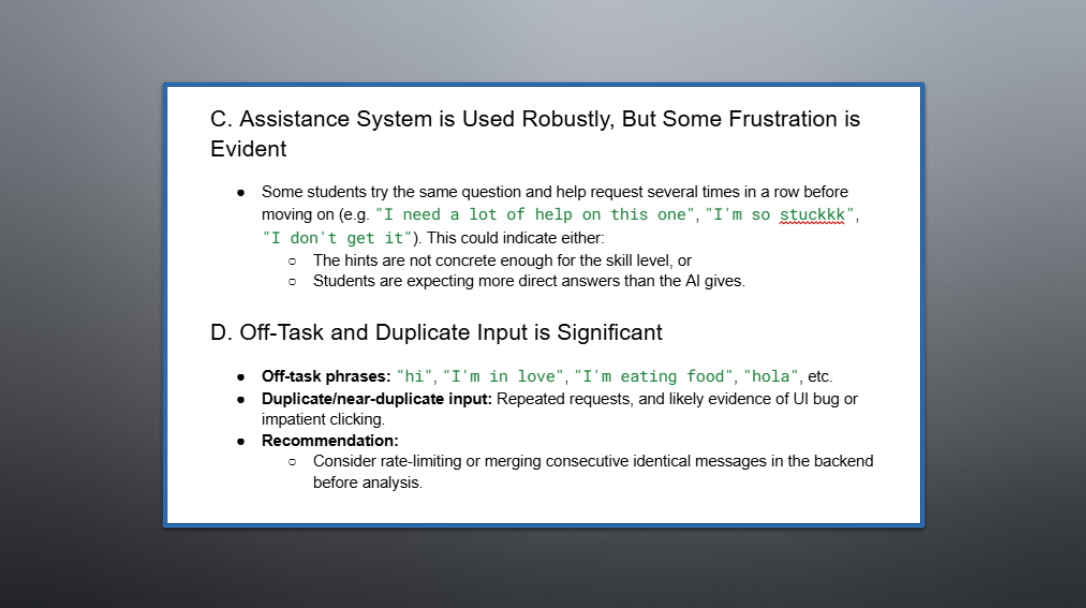
Every year during test prep season, Joe and I find ourselves doing the same thing. We walk through each question with the whole class, hoping to keep everyone on track. A few students raise their hands, some quietly get it, and others stay silent even when they’re lost. It’s hard to know who needs help in the moment, and even harder to make sure every student feels comfortable asking for it. With so many different levels in one room and the pressure to move quickly, it always feels like we’re mi


AI in the Classroom: A Rebuttal to the Doubters
There's no denying that artificial intelligence prompts strong reactions, especially in education. Concerns about privacy, depersonalization, and unintended consequences are real. But at Instructron, we designed our AI tools explicitly for classrooms, anchored in trust, transparency, and teacher empowerment. Here’s our response to the most common criticisms. 1. “AI invades student privacy.” The truth: Instructron was built to minimize the data we collect. We don’t ask for student names, email

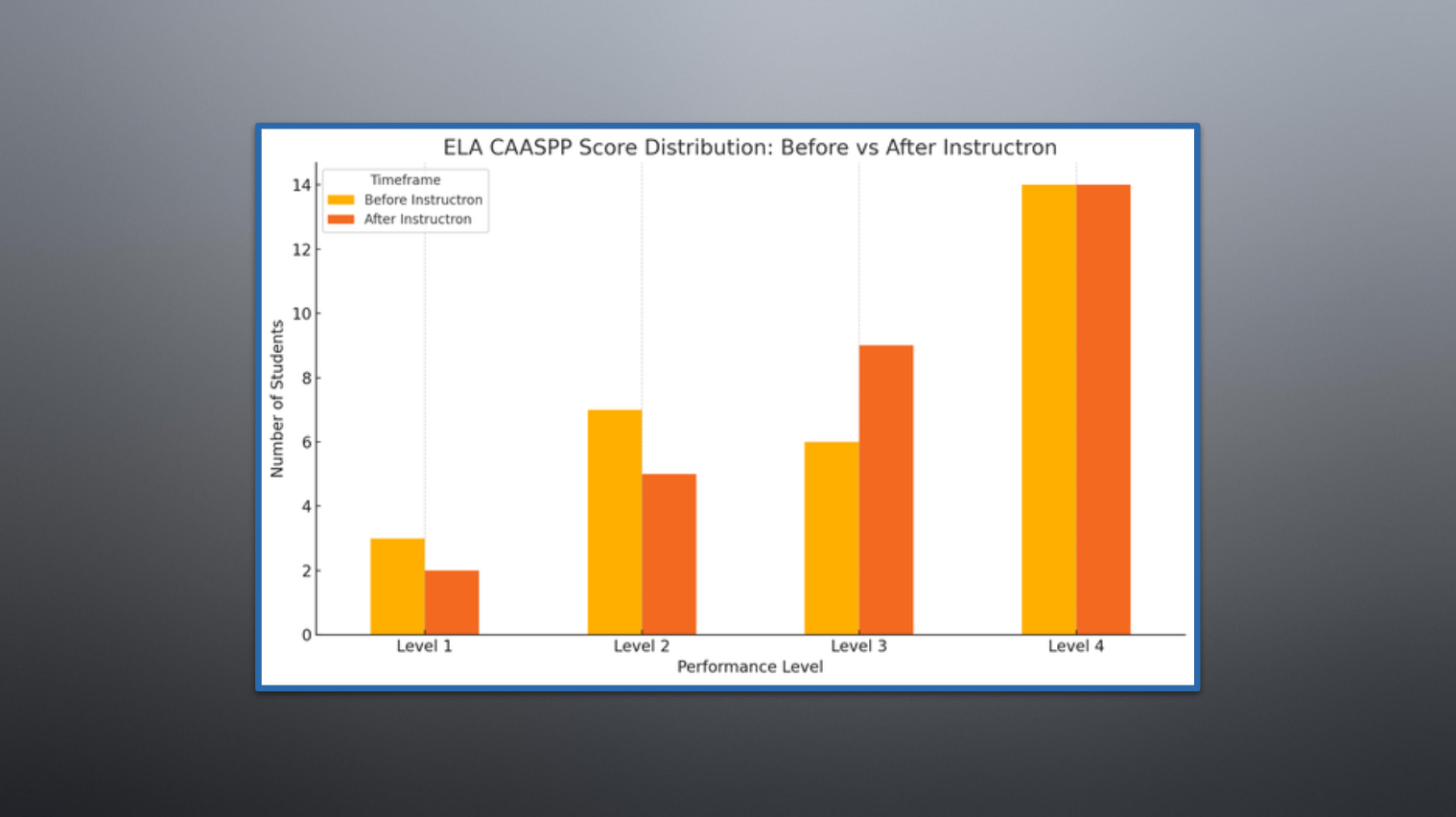
From Bubble to Breakthrough: How My Class Grew on the ELA CAASPP with Instructron
When Joe and I first sat down with my brother Khoa to talk about education and AI, one thing kept coming up—test prep. Every year, we were pulling from old benchmarks, handing out packets, running small groups, and hoping something would stick. But it always felt like guesswork. We never had a real system for helping students in the moment or seeing exactly where their thinking broke down. That conversation sparked Instructron. We didn’t want another worksheet generator. We wanted a tool that ga

Test Prep Burnout Is Real
Before we ever launched Instructron, we asked a simple question: What frustrates you most about test prep? The response was overwhelming! We heard from hundreds of teachers. They weren’t holding back. The messages poured in from classrooms across the country, and we started to see the same things again and again. Not just minor annoyances, but real obstacles that were burning teachers out and leaving students discouraged. One teacher put it bluntly: "It's boring, there's no feedback, and I can
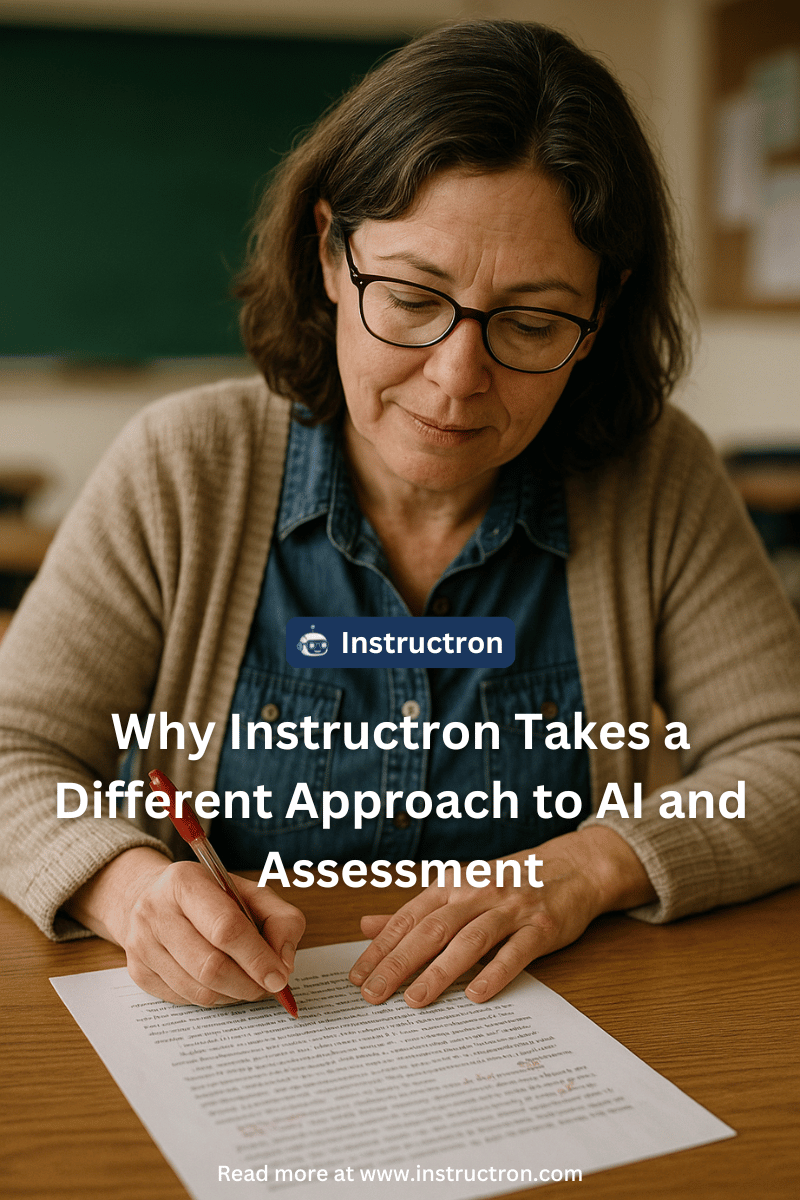
Why Instructron Takes a Different Approach to AI and Assessment
Let’s get one thing straight: grading essays is time-consuming. Like, "why do I do this to myself every Sunday night?" time-consuming. So it would be easy for us to build an AI that reads student writing and spits out a score. But that’s not what Instructron is about. We believe student writing deserves more than a number. Here's why we don't auto-grade essays and what we do instead. Writing Is a Process, Not a Product Instructron is built on the idea that writing should be coached, not judg
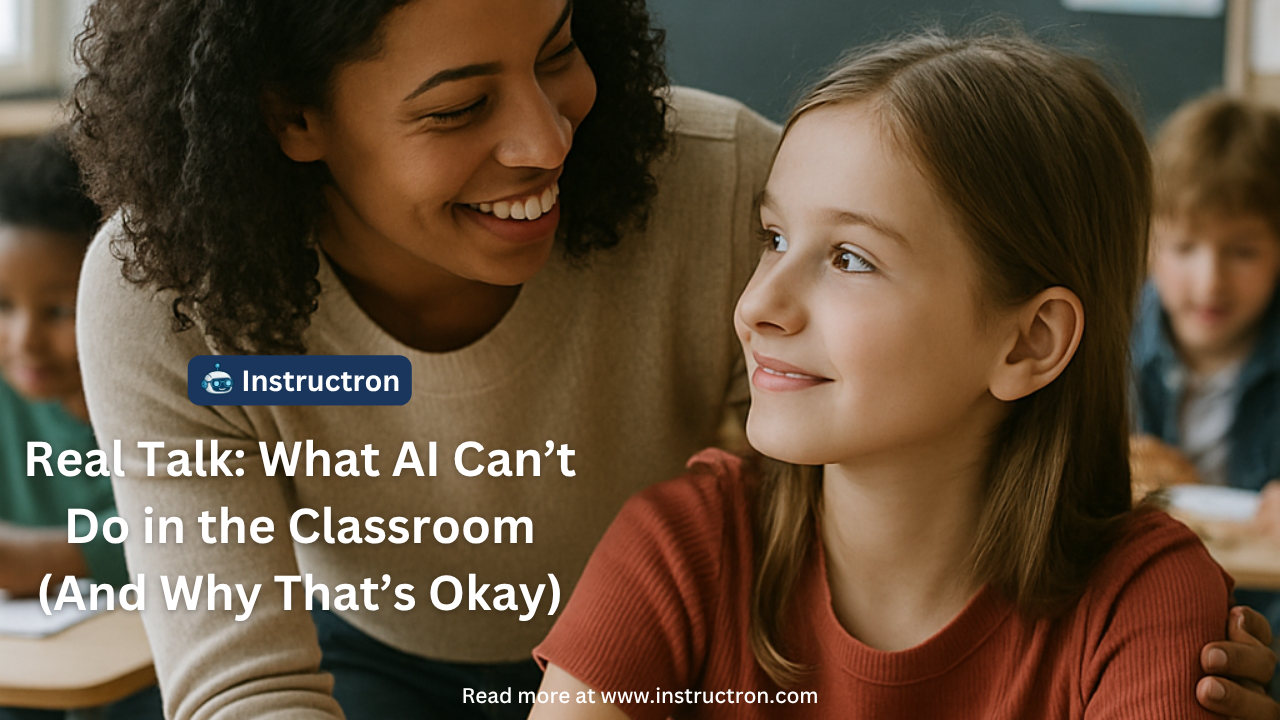
Real Talk: What AI Can’t Do in the Classroom (And Why That’s Okay)
Let’s get one thing straight: we love AI. Obviously. We built Instructron because we believe it can make teachers’ lives easier and students’ learning stronger. But even we know it has limits. And that’s actually the whole point. AI isn’t a teacher. It doesn’t read the room. It doesn’t pick up on the weird vibe after lunch. It doesn’t notice when a usually chatty student suddenly goes quiet. And it definitely doesn’t understand the full picture behind a kid’s behavior, effort, or growth. What
AI Tools in Education: What’s Worth Your Time in 2025?
If you're a teacher, you’ve probably seen the explosion of AI tools being marketed to schools. Tools for grading, lesson planning, test prep, and more. And while some are genuinely helpful, others feel like they were built by people who’ve never stepped foot in a classroom. So which ones are actually worth looking at this year? We reviewed the most-used AI platforms in schools right now and broke them down by what they do for you (and your students). Whether you’re trying to save time, improve